



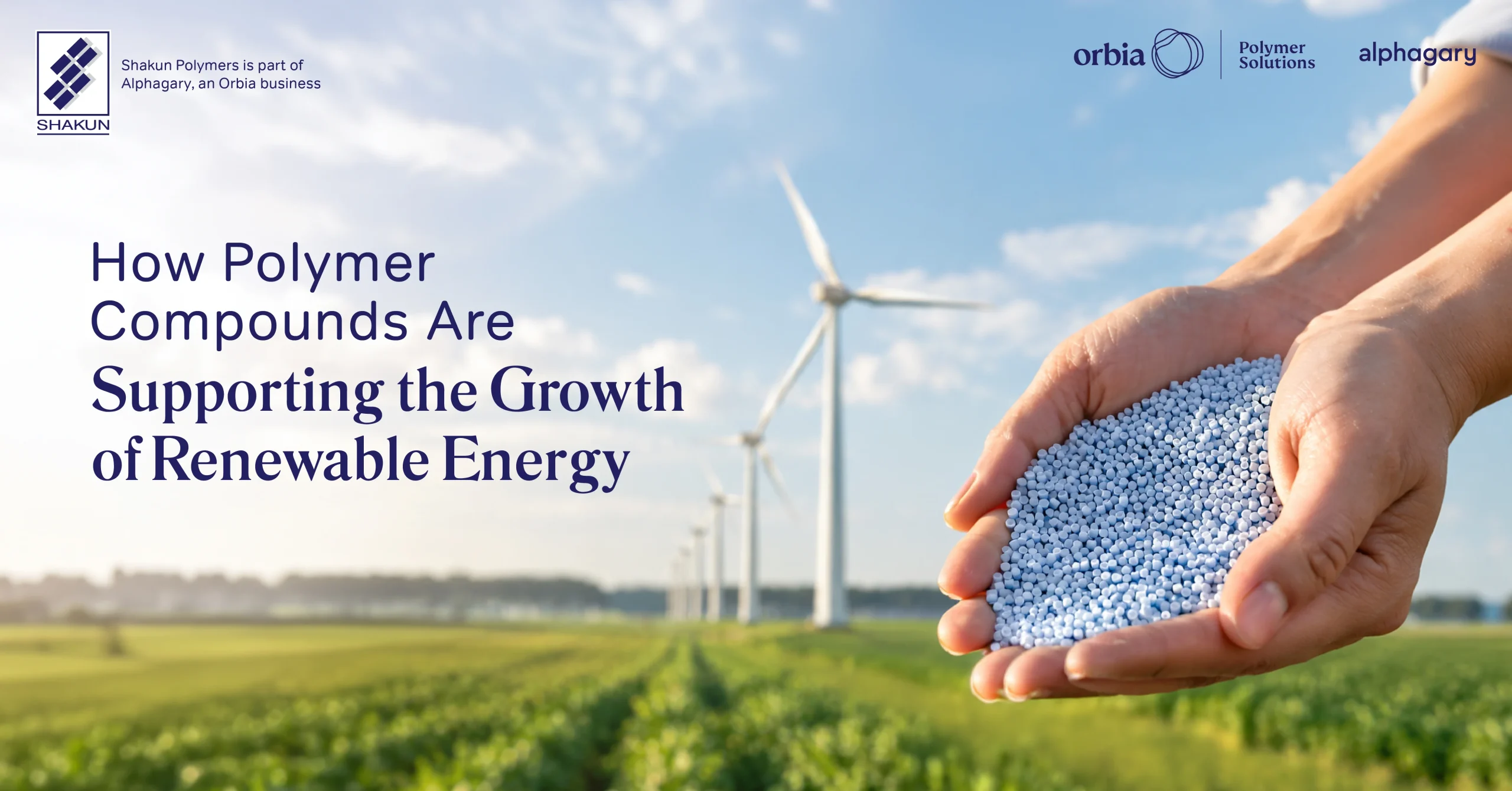
How Polymer Compounds Are Supporting the Growth of Renewable Energy
The global shift toward clean power relies heavily on invisible materials that keep energy flowing safely under brutal environmental conditions. Solar arrays, wind turbines, and long-distance electrical grids generate immense power, but their long-term performance rests entirely on advanced cable insulation and sheathing materials. Without specialised polymer compounds, solar cabling breaks down under intense UV exposure, offshore wind lines corrode under dynamic flexing, and high-voltage transmission lines suffer dielectric failure.
To bridge the gap between renewable energy generation and grid delivery, material engineers rely on advanced transmission Polymer Compounds for Renewable Energy. From electron-beam cured polyolefin formulations to high-purity semi-conductive shields, modern compounding technology provides the foundational durability needed for a sustainable energy future.
Solar Energy Infrastructure: Enduring Thermal Stress and Severe UV Conditions
Solar photovoltaic (PV) plants operate under relentless outdoor exposure. Cable systems in utility-scale solar farms must withstand ambient temperature fluctuations, intense ultraviolet radiation, and continuous moisture without cracking or degrading over a 25- to 30 year operational lifecycle.
Standard commercial cable jacketing materials rapidly deteriorate under these conditions. To solve this, cable manufacturers use specialised Halogen-Free Flame Retardant (HFFR) compounds processed through electron-beam (E-beam) cross-linking.
Advanced polyolefin formulations, such as Shakun Polymers’ ECOTEK® HFFR E-beam compound series (including grades like SPL-ZHFR-EXP-EB-08), are engineered specifically to meet stringent international standards like BS EN 50618 and IEC 60332-1-2. The high-density chemical cross-linking achieved via E-beam curing provides exceptional thermal stability and mechanical toughness.
Furthermore, halogen-free properties ensure that if a localised electrical fault occurs, the cable emits low smoke and zero corrosive gases, protecting nearby solar inverter equipment and personnel.
Wind Energy Systems: Dynamic Flexing and Harsh Coastal Operations
Wind turbines present a demanding physical environment for electrical cable insulation. Cables hanging inside tall wind turbine towers must sustain continuous torsional stress as the nacelle rotates to catch the wind. Offshore wind installations add severe atmospheric humidity, salt spray corrosion, and chemical exposure to the equation.
Thermoplastic and cross-linked polyolefin insulation compounds deliver high mechanical flexibility alongside oil and chemical resistance. Silane cross-linkable HFFR compounds form a tightly cross-linked molecular network that resists mechanical abrasion and fatigue caused by continuous tower swaying.
By protecting internal copper conductors against moisture ingress and vibration wear, high-grade polymer jacketing ensures uninterrupted power flow from wind generation hubs to land-based sub-stations.
Power Transmission and Grid Integration: Managing High-Voltage Field Stress
Generating clean power is only half the equation; transmitting bulk power over hundreds of kilometres to urban distribution networks requires robust medium-voltage (MV), high-voltage (HV), and extra-high-voltage (EHV) underground and subsea cables.
At high transmission voltages, localised electrical stress concentrations at the interface between the metal conductor and the primary insulation can lead to partial discharge, electrical treeing, and sudden dielectric failure.
To prevent electrical breakdown, high-voltage transmission cables rely on specialised semi-conductive shielding compounds.
- Electrical Field Smoothing: Advanced semi-conductive materials like Shakun’s ESCONTEK® series utilise ultra-high purity carbon black to provide a smooth, continuous conductive boundary over primary XLPE insulation.
- High-Voltage Grid Reliability: For voltage levels up to 154 kV and beyond, cross-linkable compounds like SP-SCXL-9999-HV deliver uniform volume resistivity and defect-free interfacial bonding, meeting international standards such as IEC 60840 and IEC 62067.
- Thermal Endurance: These materials maintain stable electrical performance across continuous operating temperatures of 90°C and emergency overload limits up to 130°C.
Key Performance Advantages across Clean Energy Sectors
| Renewable Sector | Main Operational Risk | Polymer Compound Function | Key Standard / Product Solution |
| Solar PV Arrays | UV degradation, high heat, fire hazard | Flame retardancy, zero halogen, UV stability | ECOTEK® E-Beam Compounds (BS EN 50618) |
| Wind Turbines | Torsional flexing, oil exposure, corrosion | Abrasion resistance, high flexibility, moisture barrier | HFFR Silane Cross-linkable Sheathing |
| Power Transmission | Partial discharge, dielectric stress | Field stress equalisation, high-purity shielding | ESCONTEK® SP-SCXL-9999-HV (IEC 60840) |
Shakun Polymers: Empowering Renewable Grid Reliability
The global energy transition requires cable infrastructure that performs reliably for decades under extreme environmental conditions. As a specialist in wire and cable compounding, Shakun Polymers plays a direct role in supporting clean energy expansion by engineering specialised transmission Polymer Compounds for Renewable Energy.
Through its targeted product families, Shakun provides cable manufacturers with fully certified, high-performance solutions:
- ECOTEK® Halogen-Free Flame Retardant (HFFR) Series: Delivers UV resistance, thermal ageing endurance, and zero-halogen fire safety for solar PV arrays and flexible wind turbine cables under standards such as BS EN 50618 and TUV certification.
- ESCONTEK® Semi-Conductive Series: Provides ultra-pure, defect-free conductor and insulation shielding for MV, HV, and EHV transmission lines operating up to 154 kV and beyond.
By investing in automated compounding facilities and dedicated pilot cable testing lines, Shakun Polymers enables global cable makers to achieve smooth extrusion processing, precise batch consistency, and full compliance with IEC standards. As grid voltages increase and solar and wind installations expand into harsher environments, Shakun’s material innovations continue to strengthen renewable energy transmission infrastructure worldwide.