


-
By Shakun Polymers
-
November 23, 2026
- 0 Comment
Polymer Solutions for High-Voltage & Extra-High-Voltage Cables
The Growing Need for Reliable HV and EHV Cables
As power networks expand to support urbanisation, industrial growth and renewable energy integration, the demand for dependable electricity transmission continues to increase. High-voltage (HV) and extra-high-voltage (EHV) cables play an important role in transmitting large amounts of electrical power over long distances and across demanding operating environments.
These cables operate under significant electrical and thermal stresses. Their performance depends not only on conductor design but also on the quality and consistency of the materials used in their construction.
This makes Polymer Solutions for High-Voltage applications an important area of material development, particularly for insulation, semi-conductive shielding and protective sheathing.
Understanding the Role of Polymer Compounds
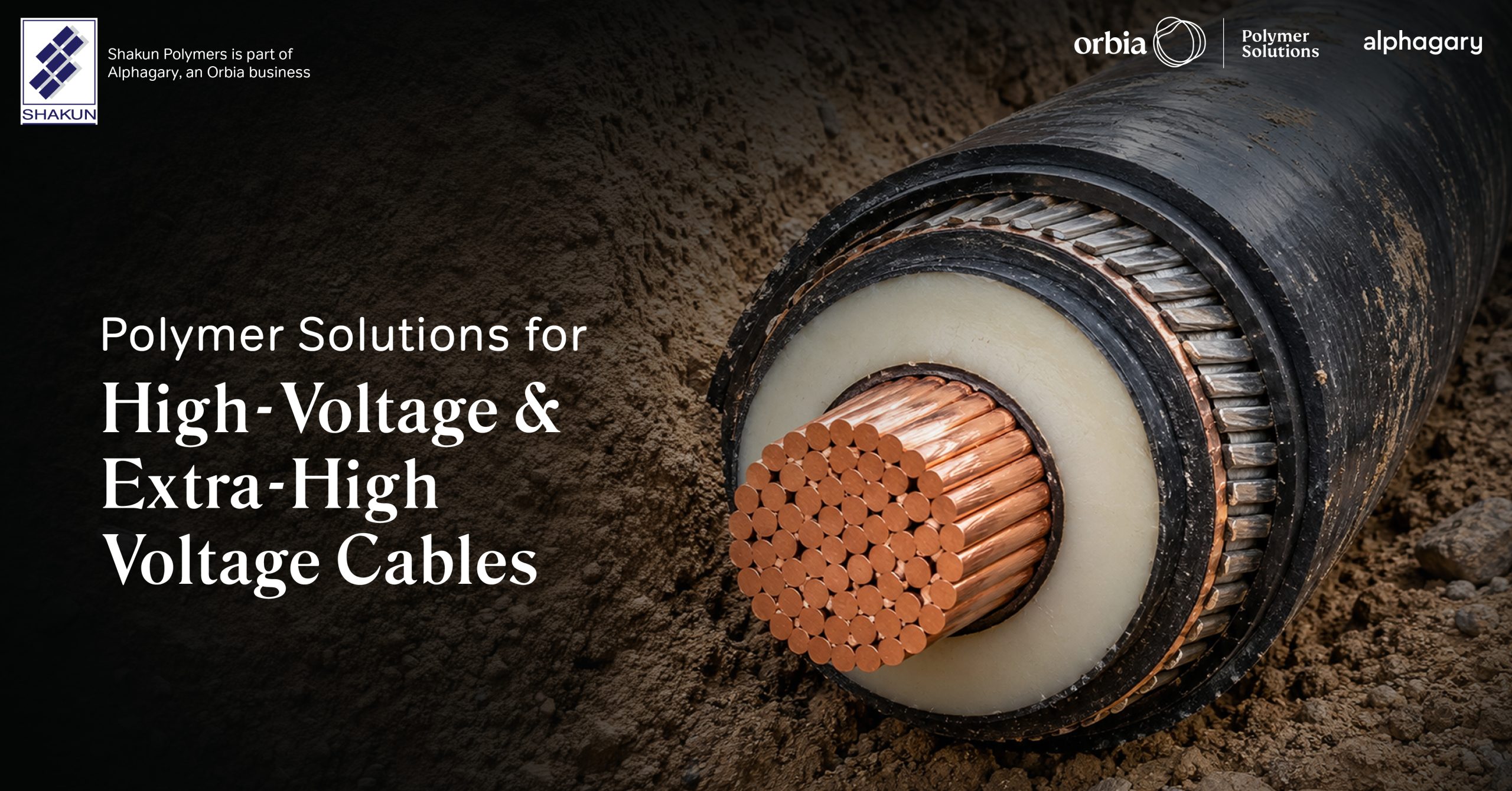
Polymer compounds form an essential part of modern power cable construction. Each layer serves a specific purpose, contributing to electrical performance, mechanical protection and long-term reliability.
In HV and EHV cables, material selection becomes particularly critical because even minor inconsistencies can affect the cable’s electrical performance.
The primary polymer applications include:
- Insulation compounds: Designed to provide electrical insulation between the conductor and surrounding layers.
- Semi-conductive compounds: Used in conductor and insulation shielding to support a uniform electric field and minimise electrical stress concentrations.
- Sheathing compounds: Provide external protection against mechanical damage and environmental exposure.
Each material must be developed to meet the specific requirements of the cable design and its intended operating conditions.
Semi-Conductive Compounds: Maintaining Electrical Integrity
Semi-conductive compounds are critical components in HV and EHV cable systems. They are used in conductor shielding and insulation shielding layers to create smooth, consistent interfaces around the insulation.
These layers help manage electrical stress and reduce the risk of localised field concentrations that could affect cable reliability.
The performance of a semi-conductive compound depends on factors such as electrical properties, dispersion quality, cleanliness, surface finish and processing consistency. Cross-linkable semi-conductive compounds are particularly relevant in high-voltage cable applications where demanding performance requirements must be met.
As voltage requirements increase, compound formulation and manufacturing control become increasingly important.
Insulation and Sheathing: Protection Beyond Performance
Insulation is one of the most critical components of an HV or EHV cable. It must withstand continuous electrical stress while maintaining its properties over the cable’s intended service life.
Material purity, thermal stability, dielectric performance and resistance to electrical ageing are important considerations during compound development.
Sheathing provides another layer of protection. Depending on the application, polyethylene-based compounds may be selected for properties such as environmental stress crack resistance, heat deformation performance and mechanical durability.
Together, insulation and sheathing materials contribute to the overall reliability of power transmission systems.
Key Considerations in HV and EHV Compound Selection
Selecting Polymer Solutions for High-Voltage cables requires a careful evaluation of electrical, mechanical and processing requirements.
Electrical performance: Compounds must meet the electrical requirements of their intended cable application, including insulation integrity and shielding performance.
Material purity and consistency: Contamination, impurities and inconsistent dispersion can affect the reliability of high-voltage cable systems.
Thermal stability: Materials must maintain their required properties under operating temperatures and thermal ageing conditions.
Processing compatibility: Consistent extrusion, smooth interfaces and controlled processing are essential for producing reliable cable layers.
Long-term durability: Insulation, shielding and sheathing materials must be suited to the electrical and environmental stresses expected throughout the cable’s service life.
These considerations make collaboration between compound manufacturers and cable producers important during material development, testing and qualification.
Conclusion
The growing demand for reliable power transmission is increasing the importance of advanced polymer materials in HV and EHV cable systems. From semi-conductive shielding to insulation and protective sheathing, every compound contributes to the cable’s overall performance.
Continued development of Polymer Solutions for High-Voltage applications will remain important as power infrastructure advances towards higher transmission capacities and more demanding operating requirements. Material quality, formulation expertise and manufacturing consistency will continue to shape the next generation of high-voltage cable solutions.