



-
By Shakun Polymers
-
April 17, 2026
- 0 Comment
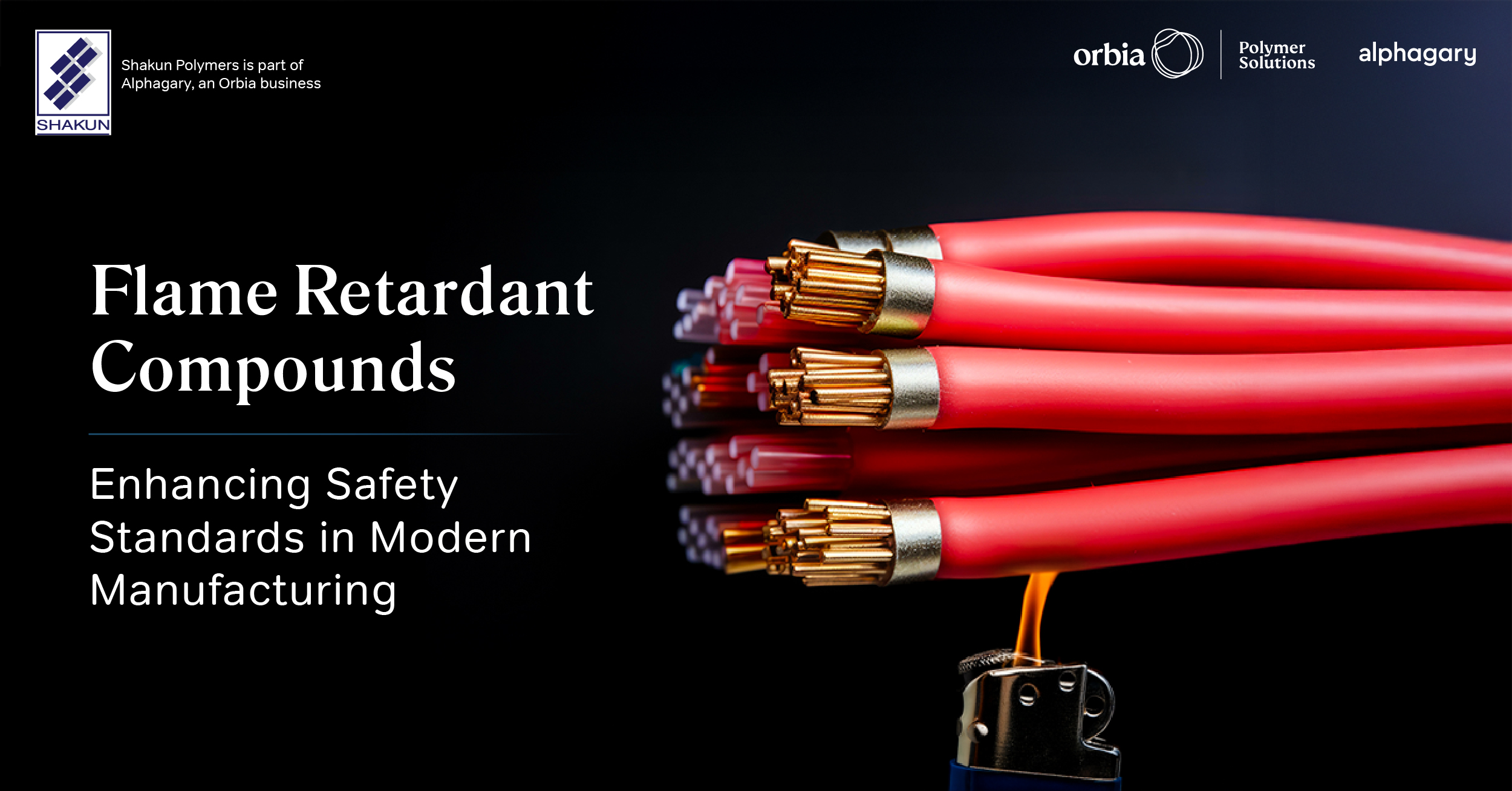
Flame Retardant Compounds: Enhancing Safety Standards in Modern Manufacturing
Fire safety has become a defining requirement in modern manufacturing. As industries expand into complex infrastructure, high-density electronics, and advanced mobility systems, the consequences of fire-related incidents grow more severe.
Flame retardant compounds are specially engineered materials designed to reduce the risk of ignition and slow the spread of flames. They are incorporated into polymers and components used across construction, electronics, automotive, and industrial systems.
Today, regulatory bodies worldwide demand higher fire performance standards. As a result, flame-retardant compounds play a critical role in helping manufacturers meet evolving safety regulations while ensuring product reliability and long-term performance.
What Are Flame Retardant Compounds?
Flame-retardant compounds are polymer formulations enhanced with additives that reduce flammability and improve fire resistance. These additives are either blended into the material during compounding or chemically integrated into the polymer structure.
The primary goal of these compounds is to inhibit ignition, reduce heat release, and limit flame propagation.
They function through several mechanisms:
- Char formation: Creates a protective carbon layer on the surface that insulates underlying material from heat and oxygen.
- Radical quenching: Interrupts chemical reactions occurring in the flame, effectively suppressing combustion.
- Thermal barrier creation: Forms a shield that reduces heat transfer to surrounding areas.
- Dilution effect: Releases non-flammable gases that dilute combustible gases near the flame zone.
These mechanisms collectively reduce fire intensity and prevent rapid flame spread.
How Flame Retardant Compounds Work
Flame-retardant technologies vary based on chemistry, application, and regulatory requirements. Traditionally, halogen-based flame retardants were widely used due to their efficiency in radical quenching. However, concerns about toxic emissions and environmental impact have driven significant innovation in this field.
There are several main types of flame-retardant systems:
- Halogenated systems: Effective in flame suppression but associated with toxic and corrosive gas emissions.
- Mineral-based systems: Use aluminium trihydrate or magnesium hydroxide to release water and cool the material during combustion.
- Phosphorus-based systems: Promote char formation and reduce heat release.
- Halogen-free systems: Designed to minimise toxic smoke and corrosive emissions while maintaining high flame resistance.
Modern manufacturing increasingly favours halogen-free and environmentally responsible solutions. These advanced formulations meet stricter fire safety standards while reducing health and environmental risks.
The shift reflects a broader industry commitment to safer materials, particularly in enclosed or high-density environments such as metro systems, data centres, hospitals, and electric vehicles.
Benefits Beyond Safety
While fire prevention is the primary objective, flame-retardant compounds deliver additional advantages that extend across compliance, sustainability, and production efficiency.
Regulatory Compliance
- Meet international fire safety standards such as IEC, UL, and EN norms.
- Support compliance with RoHS and REACH regulations.
- Enable manufacturers to access global markets with stringent safety requirements.
Environmental Impact
- Halogen-free options reduce toxic and corrosive gas emissions.
- Lower smoke generation improves air quality during fire incidents.
- Align with sustainability goals and green building certifications.
Manufacturing Advantages
- Improved material stability at elevated temperatures.
- Enhanced durability in demanding industrial environments.
- Design flexibility for customised performance requirements.
These benefits demonstrate that flame-retardant compounds are not merely safety additives but strategic enablers of modern product development.
Conclusion
Flame retardant compounds have become indispensable in enhancing safety standards across electronics, construction, automotive, and industrial sectors. By inhibiting ignition, slowing flame spread, and reducing fire hazards, they significantly improve risk management in critical applications.
Beyond fire protection, they support regulatory compliance, environmental responsibility, and long-term product reliability. As global standards tighten and industries prioritise safer materials, advanced flame retardant compounds will continue to shape the future of modern manufacturing.
At Shakun Polymers, we develop advanced flame retardant compounds engineered to enhance safety, compliance, and long-term reliability across critical industrial applications.